
Here’s an engaging activity that works well for integrating many important concepts from the empirical sciences with artistic expression and even spiritual (or non-spiritual) considerations from various cultural traditions and world views.
Youngsters who’ve acquired the foundational science knowledge required for this activity can work independently or in teams to organize a few of their thoughts about the nested structure of the universe and the evolving complexity of matter across time. Significantly, there are options included in the Directions that provide space for religious and even ecumenical / inter-spiritual interpretations of this intellectual challenge – as well as more strictly materialist, agnostic, or atheistic framings of this activity.
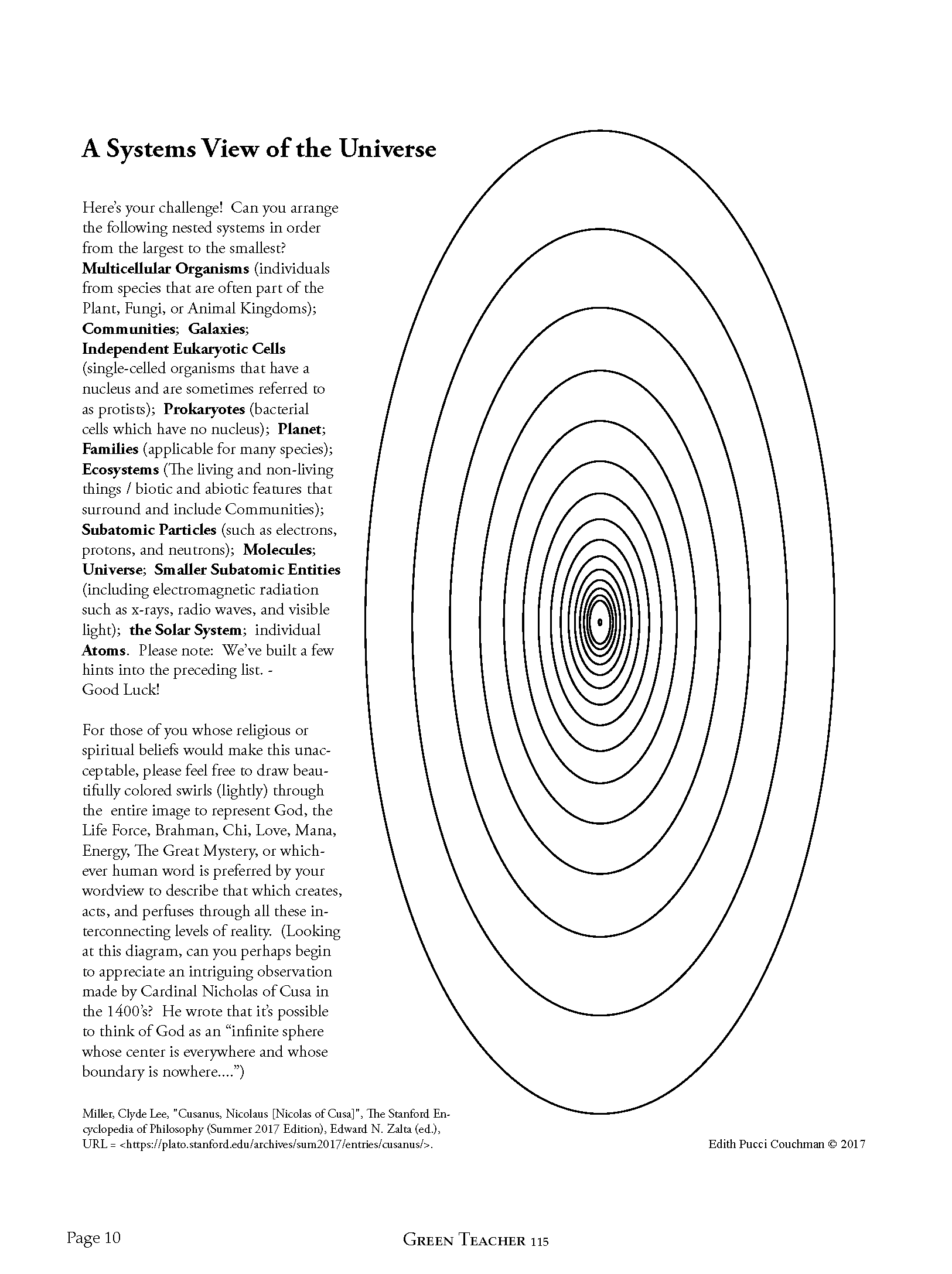
This is the basic diagram:
Edith-Pucci-Couchman-Nested-System-Diagram
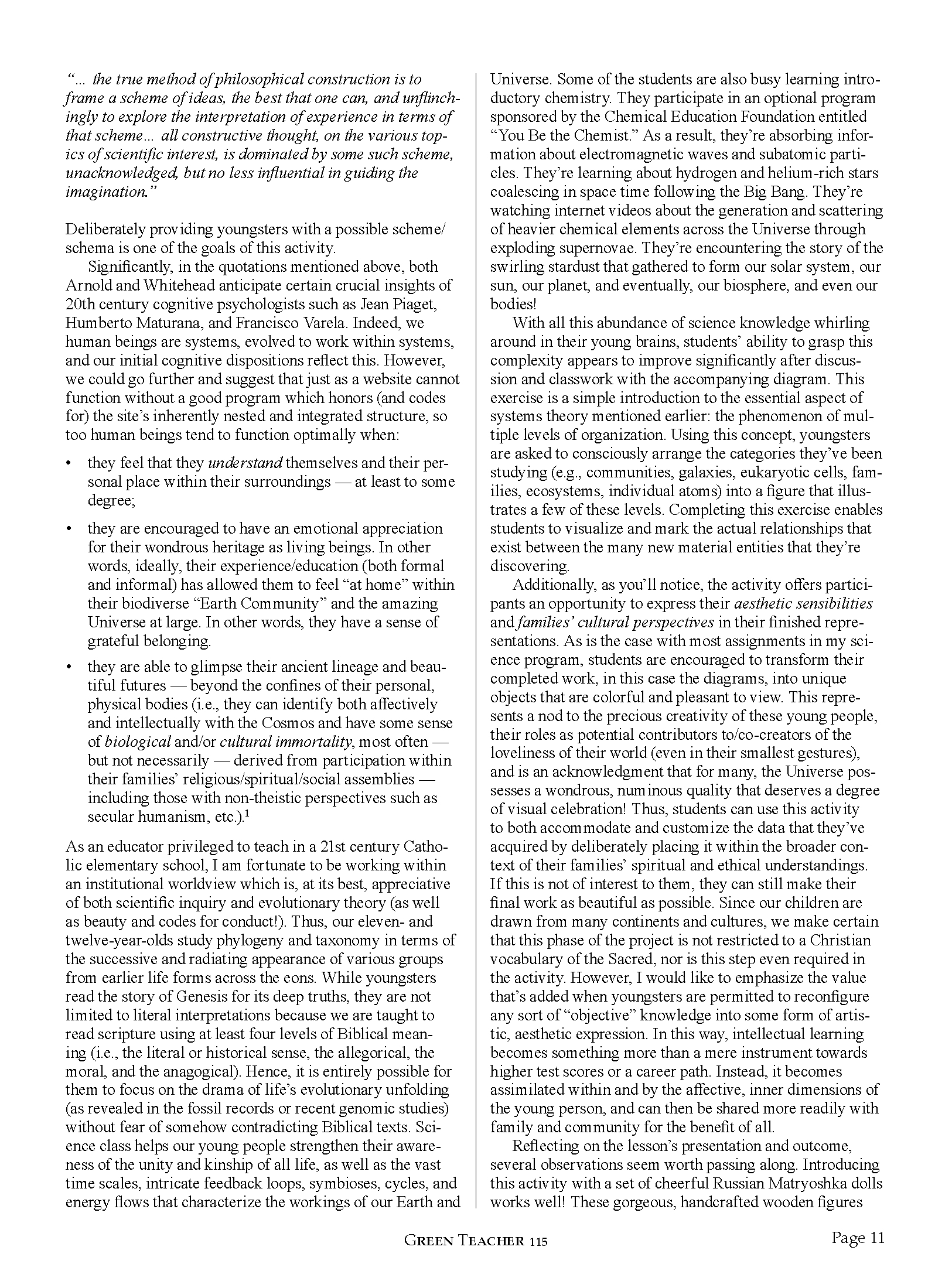
A full description of the rationale shaping this activity plus teaching suggestions for introducing it were published in the Winter 2018 issue of the Canadian online journal Green Teacher. Because this project, titled “A Systems Activity about Our Universe,” was one of two free articles in that 115th edition of the magazine, you could read the entire text at the website. However, since Green Teacher ceased online publication in 2024, its archives have been acquired by another organization, and such previously free content is no longer available. With this in mind, you’ll find a reprint of the entire print version of the article
Green Teacher 115 11Green Teacher 115 12
Green Teacher 115 13
Green Teacher 115 14
Green Teacher 115 15
At the beginning of this web page (although not in the print version of the article), we presented the horizontal version of the Nested Systems Diagram. I strongly prefer this for student use and it was even provided on the Green Teacher website as the accompaniment to the free digital article. The vertical format was only employed because of the print magazine’s format.
One additional note: In the list of words students must order from smallest to largest, you’ll see the terms “families” and “communities.” Please let students know that here we’re talking loosely about “families” and “communities” that are large enough to be easily seen by technologically un-aided, human sight. (A case could easily be made that there are examples of “families” and “communities” present at the microscopic level.)
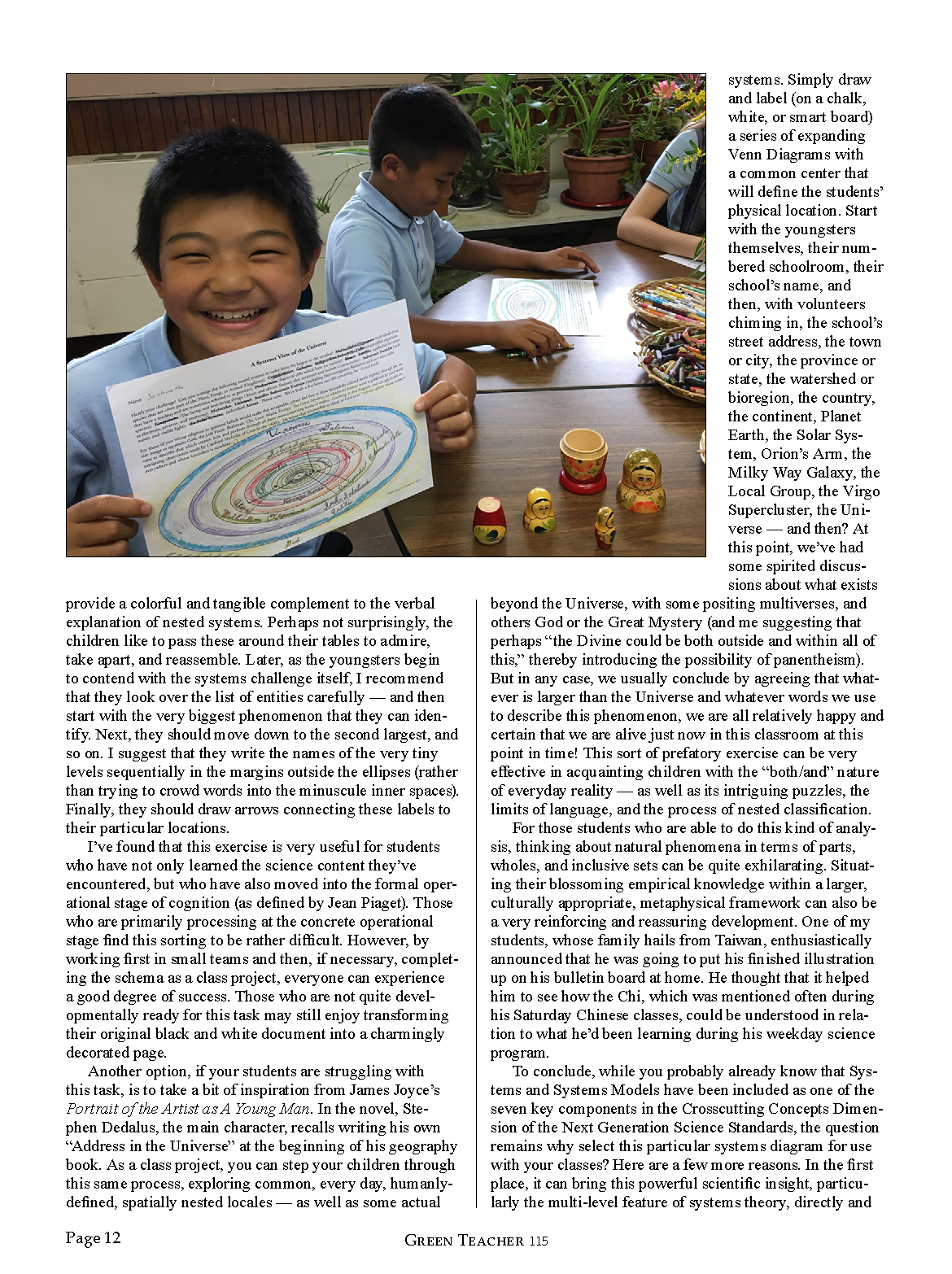
Below you’ll also find a few samples of students’ beautiful finished interpretations of the activity.


