Here’s an illustrated coloring page about seed dispersal that can help students prepare for a field trip focused on the fascinating – and vital – plant adaptations associated with this process.
Here are the 5 Dispersal Adaptations highlighted:
Tasty Travelers – Dispersal achieved as a result of mobile animals feeding on the calorie-rich, often visually attractive and aromatic (delicious!) outer layers of fruits. The animals then scatter the enclosed seeds.
Wind Powered Fliers – Wind-dispersed seeds that often feature structures like wings, flaps, and fluffy attachments that can loft the seeds into the air
Armoured Seeds – A case of dispersal through gravity combined with particularly obvious defenses against certain seed predators, and some co-evolved dispersal by a limited set of birds and mammals (such as squirrels, blue jays, and nuthatches in the N.E. Temperate forest)
Hitchhiker Seeds – seeds with evolved structures that attach to other creatures’ fur or feathers (the inspiration for human’s Velcro)
Jack-in-the-Box Seeds – seeds with physical structures that allow for mechanical propulsion
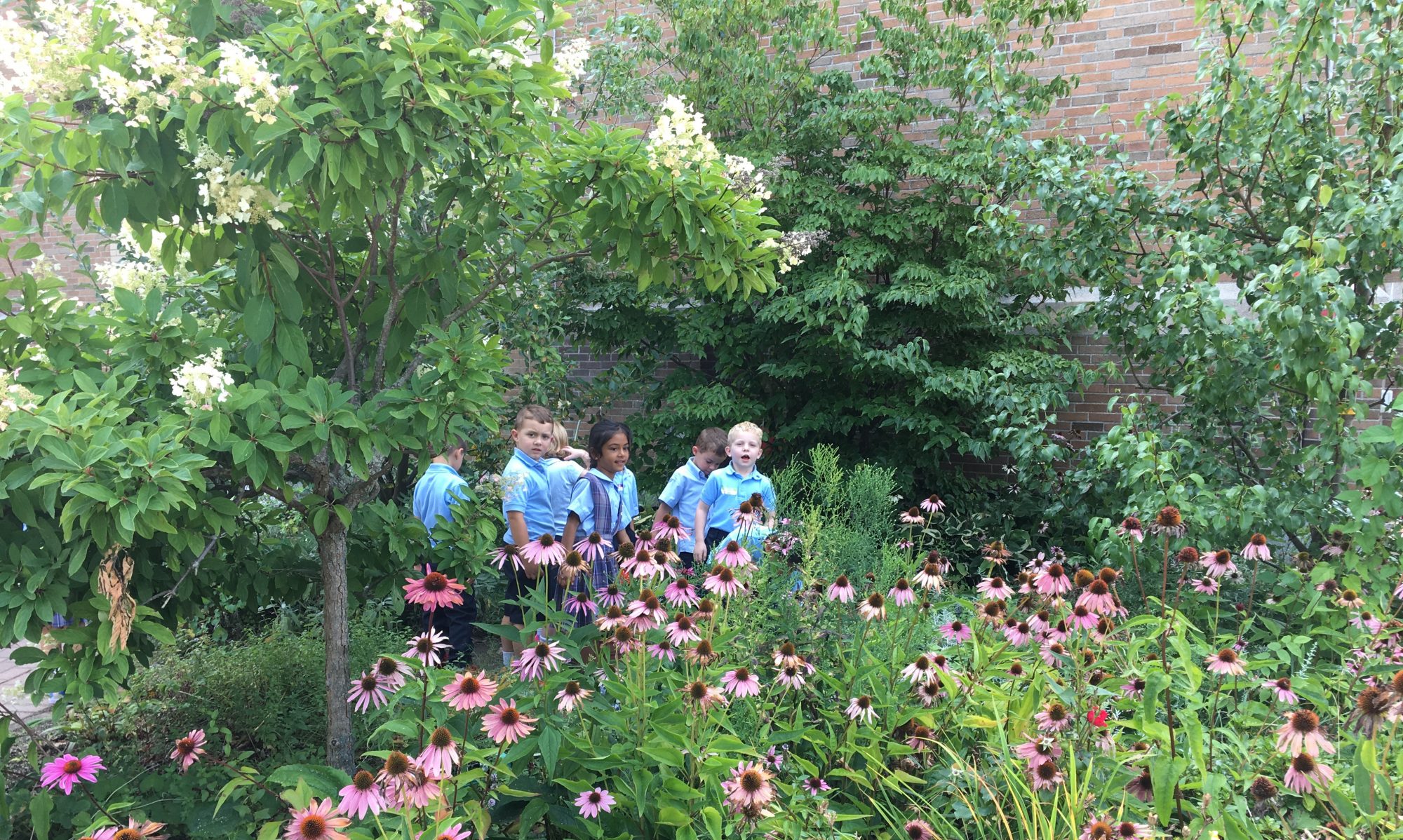
The initial field trip could be as simple as a walk to a nearby park or to a deliberately un-mowed edge of your school grounds. (The latter ‘habitat haven’ can serve as an ecological refugia for nurturing biodiversity of all kinds. This intentionally un-tended area can support children’s learning about succession, native species, and thriving exotics.) Perhaps the walk will be to areas that your school community has deliberately populated with nut and fruit trees, shrubs, and native perennials – all part of a permaculture landscaping design that also encompasses the school’s vegetable gardens. In any of these contexts, there’s much to be learned when students’ attention is directed towards the phenomenon of seed dispersal. Youngsters can begin to notice and appreciate the wondrous processes and patterns that are involved in coevolution, natural selection, “form following (or initiating) function.” and the ongoing propagation of life through time.
The Seeds on a Journey coloring page can be also be useful for debriefing or quiet reflection after a walk outside – whether it’s along the trails of a nature center or the sidewalks of your neighborhood. It’s especially relevant in late summer or autumn.

Consider augmenting the actual walk not only with this coloring page but with journalling, a modest amount seed collecting and subsequent collage, and / or a lively, singing circle game about seed dispersal that includes choosing and racing, such as “Berry in the Beak.” The goal, as always, is to make the learning congenial and fun for children with varied aptitudes, interests, and needs. For directions regarding the singing circle game, “Berry in the Beak,” please see page 111 in the print version of Circling the Sun, Racing the Wind – or check p. 110 on the free early draft version of the book available at https://evolvingbeauty.org/a-draft-of-the-activities-collection-circling-the-sun-racing-the-wind/: You can find the recorded melody and lyrics here: https://evolvingbeauty.org/natural-start-alliance-conference-traditional-games-workshop-berry-in-its-beak-seed-dispersal-game/
As mentioned earlier, the essential point in all this is to assist young people to develop their appreciation for and understandings of the beautiful, intricate, and ancient interdependencies / relationships that enable living creatures to continue Life.
Here’s yet another view of the coloring page, just in case the pdf embedder at the top of the page is not working well with your technology – and check out the mixed image and language-centered activity page for older students that explores this same process: https://evolvingbeauty.org/seed-dispersal-traveling-seeds-pt-2-using-words-or-images-to-show-learning/
