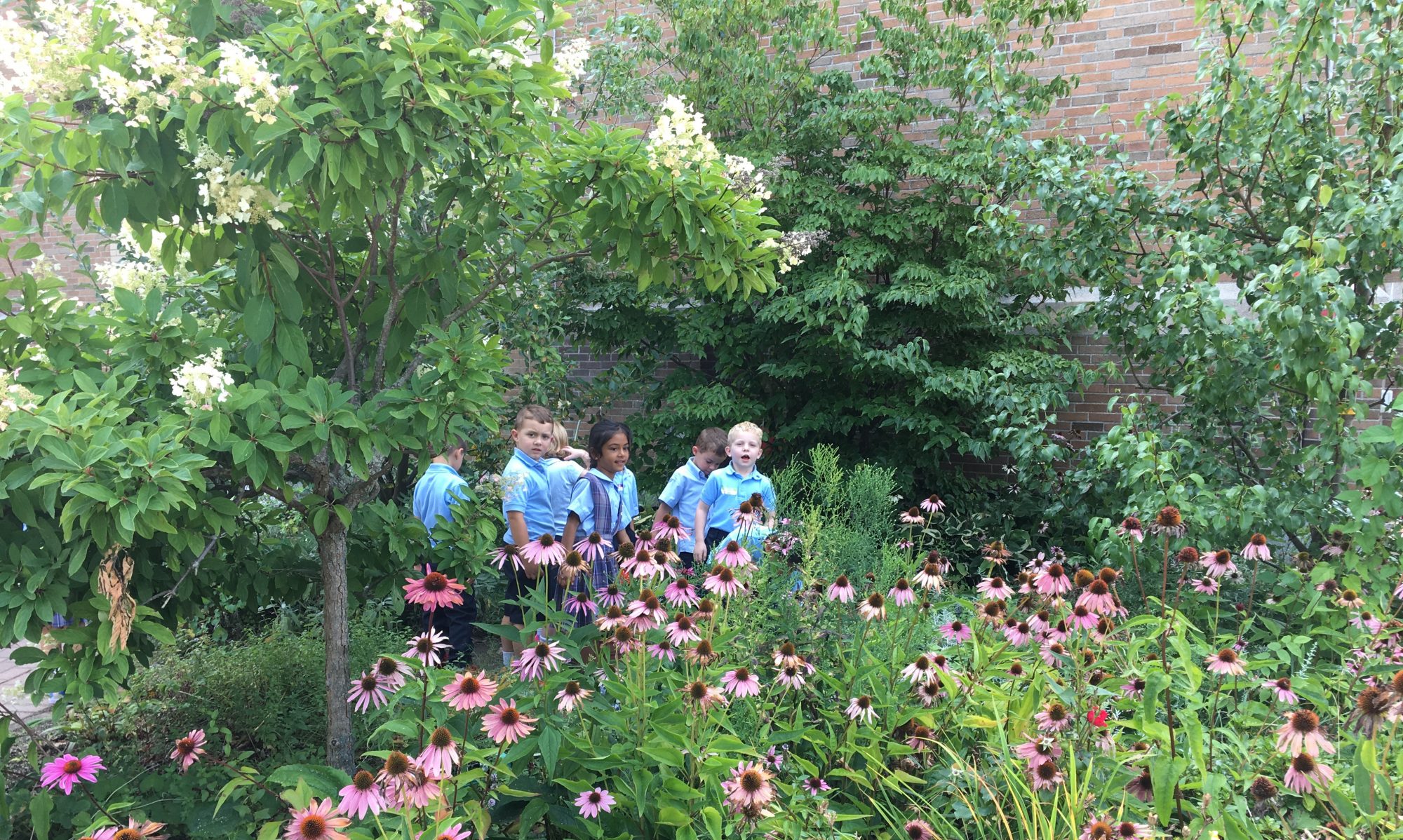

Below you’ll find both the written lyrics and an audio version of the melody I use for the ‘Seasons’ Circle Song’ activity. This is a moving, singing circle game featuring simple creative dramatics. It’s designed for very young children, and is probably best for 4- and 5-year-olds – although some 3- and 6-year-olds enjoy playing it, depending, as always, upon the personalities and interests of the youngsters. The activity can serve as a pleasant, lively, and sociable introduction for seasonally-based nature programs or for general environmental education in these early years. It draws children’s attention to the magnificent patterns that unfold due to Earth’s year long orbit around the Sun and the fluctuating energy levels that occur due to our planet’s tilted axis – fascinating astronomical details they can learn when they’re a bit older. The singing, moving, circle formation challenges children’s capacities for coordinated motion, attention to others, and vocal expression. It can help individuals establish positive peer connections, expectations, and a sense of belonging at many levels. The youngsters should be encouraged to have fun impersonating their fellow creatures of the Northeast Temperate Forestlands. During the brief songs, they can acknowledge and, in a way, celebrate these amazing beings who, in their varied ways, help make this region both beautiful and life-sustaining.
This seasons activity and the accompanying visual arts project called the “Seasons Clock,” are further described on the following two pages of this website: “The Seasons’ Clock” and “A Draft of the Activities Collection Circling the Sun, Racing the Wind.” The latter is located in the Special Projects section.
In any case, here are the suggested melodies (apologies for the vocal quality!) and the text of the lyrics.
“Seasons’ Circle Song” – (Basic Lyrics for Spring, Summer, Fall, and Winter Songs and Accompanying Actions)
Chorus / Refrain (To be sung before each seasonal verse section – and possibly after – depending on the group)
Winter, Spring, Summer, and Fall, (Join hands and circle round.)
The year goes round and round-oh. (Drop hands in preparation for the next phrase.)
In Spring, the leaves sprout from the trees. (Lift up arms with hands in fists. Stretch out fingers and pretend that they’re budding leaves.)
In Fall, come tumbling down-oh. (Slowly bend from the waist, lowering hands to the ground with a fluttering motion of the fingers in imitation of falling leaves.)
Specific Verse for Each Season:
Spring (simplest option)
Spring showers help the plants to grow. (Join hands and circle round.)
Soon flowers are blooming brightly. (Keep circling.)
In nests in trees, the little birds grow. (Keep circling.)
Hopping frogs are singing nightly. (Drop hands and everyone hops up and down. Add frog calls.)
Spring (A more complicated but well-liked version that can also serve as a good prelude for spring gardening or plant studies.)
The warm spring sun melts winter snows. (Drop hands and stretch upward and sway – imitating plants sprouting or waking up.)
A million plants begin to grow. (Look around and smile at your neighbors!)
Buds unfold, the leaves unfurl. (Lift arms up gradually, stretching out fists to imitate leaves.)
Pussy willows bloom, and catkins twirl. (With arms lifted overhead and hands pressed together, spin around quickly. Expect dizziness!)
Drowsy bees begin to fly. (Stretch out ‘wings’ and pretend to fly in a swooping motion with a loud buzzing sound like a princess bumblebee who’s searching for a nesting place.)
Hawks soar in the bright blue sky. (Continue ‘flying’ in a smooth, soaring fashion. Add a “kee-er, kee-er” cry in imitation of a Red-tailed Hawk’s call.)
Grey tree frogs trill and robins sing. (Make a high-pitched trill.)
Rabbits hop and leap in Spring! (Hop and leap repeatedly. The circle usually dissolves and it’s now a fine time to go outside to garden!)
Summer
Long summer days help plants grow strong. (Circle).
Mosquitoes flit past woods and lawns. (Drop hands and stretch out arms behind back to make pretend wings, move forward in imitation of an obnoxious flying insect; make a whiny, buzzing sound for fun.)
Birds try to catch them for their young. (Flap and dive rhythmically like a bird pursuing insects.)
Turtles bask in the blazing sun. (Hold still and stretch arms out from your sides. Tilt head back, and smile as if you were a turtle on a log, soaking up the sunshine.)
Fall
Autumn nights are long and chill. (Circle. Shiver at the word ‘chill.’)
The leaves turn red, the crickets still. (Drop hands and ‘chirp.’)
The geese and grackles fly away. (Pretend to flap your ‘wings’ like a goose as you travel around the circle; add honk and hink sounds – the sounds of the male and female birds respectively.)
Little chipmunks gather nuts all day. (Crouch and pretend to collect imaginary acorns by repeatedly stretching out curved hands and drawing them back very quickly.)
Winter
Winter sun is seldom seen. (Circle.)
Snow falls on fields that once were green.
The turtle and the woodchuck doze. (Tilt head, close eyes, and lift pressed hands to head in imitation of sleep; snoring optional.)
Coyotes cross the frozen snows. (Tiptoe around the circle, one after another, placing feet carefully in the footsteps of the alpha ‘coyote.’)
Maples rest and larvae curl. (Close eyes, bend chinto chest, and hunch over a little to signify dormancy.)
Underground while blizzards swirl. (Pick up precut paper snowflakes from the center of the circle and toss them up repeatedly – like confetti – to imitate the falling snow of a blizzard. This is often the highlight of the activity for the youngsters.)
The phoebe’s flown to southern climes. (Flap ‘wings’ in a pretend migration around the circle.)
But Winter suits the porcupines. (With elbows held close to the waist, put hands up by the chest with both hands and fingers sticking out at right angles to imitate the quills of a porcupine; smile confidently.)